
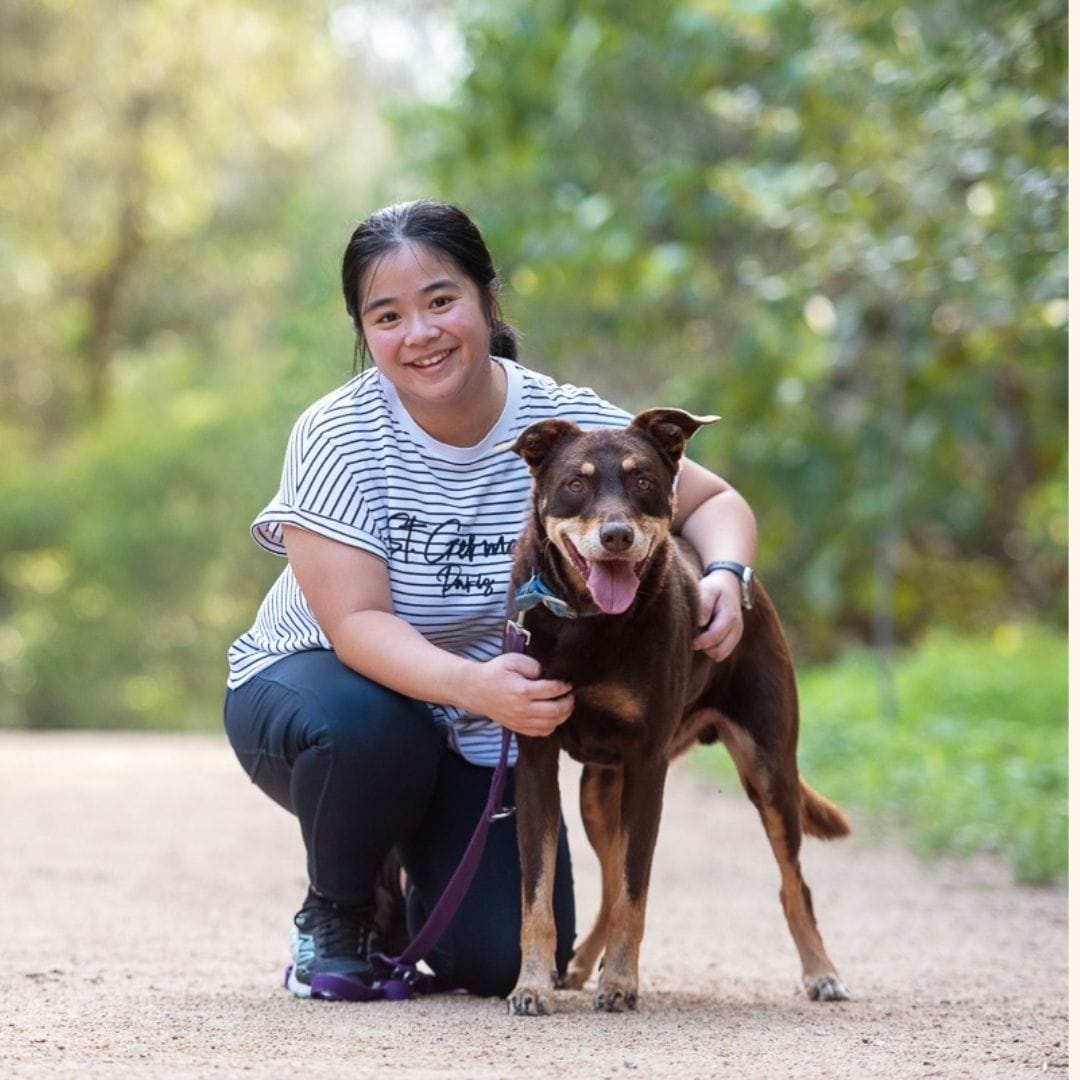
For Harding Miller coach Amanda, saying yes to coaching was about finding a meaningful way to help others. What she has discovered since is that coaching is just as much about learning, listening and growing alongside her scholars.
“I was looking for a new opportunity to help others and to do something meaningful. This seemed like the perfect opportunity for what I was looking for!”
Since becoming a coach, Amanda has seen how a strong relationship can give scholars the confidence to reach out, share what they are experiencing and seek support when they need it.
Building trust beyond the classroom
For Amanda, some of the most meaningful moments have been when her scholars have told her that something from their conversations has helped them navigate a challenge.
“I think every time my scholars tell me that they were able to take something away from our conversation and how it has helped them navigate through their challenges, it really strengthens that personal connection.”
That connection became even clearer when her scholars started reaching out to her independently.
“When my scholars started to reach out to me on their own accord, it really showed that there was a degree of trust and connection.”
Amanda also noticed a shift when her scholars realised that her role as a coach was about more than academics.
“Once they realised this, I sensed a change and suddenly that opened up a lot more conversations. The day-to-day challenges they experienced became shareable.”
For Amanda, creating that space – where scholars know they can talk openly and be themselves – is an important part of what coaching is about.
Learning from the scholars
While coaches are there to support and encourage their scholars, Amanda says the learning goes both ways.
“I think one thing that my scholars have taught me is: take every opportunity you get.”
Amanda admits that she can sometimes be hesitant when opportunities arise. Watching her scholars embrace opportunities and pursue their ambitions has encouraged her to think differently.
“Seeing my scholars reach for every opportunity and the ambition they each have is truly inspiring.”
It is a reminder that coaching is a two-way relationship. While Amanda hopes to help her scholars recognise their opportunities and potential, they have also encouraged her to do the same in her own life.
A reminder to slow down
One conversation with a scholar has stayed with Amanda because, in giving advice, she realised she needed to hear it herself.
Her scholar was struggling to balance their social life and academics. Amanda encouraged them to take a step back and enjoy the little things in life.
“This advice I gave my scholar … made me realise how much it applied to me too.”
The conversation reminded Amanda that constantly pushing yourself is not always the answer.
“Sometimes pushing yourself to your utmost limit is not always the way to go, and looking after your mental wellbeing is equally as important.”
This is a lesson that has continued to shape Amanda’s own perspective.
“I think coaching has made me realise that sometimes things are not as complicated as we think. Sometimes we need to slow our footsteps down, take a look around us, take a deep breath, come back with a fresh mindset and keep moving forward.”
You don’t need to have every answer
Amanda says she has not doubted whether she is the right person to support her scholars. Instead, she has learned that being a good coach does not mean having an answer for everything.
“I think a big part of being a coach is also understanding what my strengths and weaknesses are.”
For Amanda, knowing when to connect a scholar with another resource or source of support is just as important as the guidance she can provide herself.
“It’s not about having the answer to every question, but more so, knowing when to refer your scholars to other resources that can actually help them.”
Finding the right approach
Every scholar is different, and learning how to navigate those differences has been one of the more challenging aspects of coaching for Amanda.
“Everyone has such different personalities, so when it comes to understanding how to approach different conversations with different scholars, I found that to be one of the hardest parts.”
Rather than expecting to get everything right immediately, Amanda has learned to adapt her approach over time.
“To begin with, I definitely found the role challenging as I tried to navigate each scholar’s personality and change my approach one conversation at a time.”
For Amanda, getting to know each scholar as an individual has been an important part of developing genuine connections.
Making time matters
Amanda has also developed a simple but deliberate way of staying connected with her scholars.
“I really try and check in with my scholars every two weeks and give them a call at least once a month.”
While these actions might seem small, Amanda believes they send a powerful message: that her scholars are worth making time for.
“I think this may seem like something small but I believe that it also shows that I am deliberately making time to talk to my scholars.”
It is this consistency that Amanda hopes her scholars will remember long into the future.
“If my scholars are reading this in ten years’ time, I really hope that they remember the easy conversations and that I always have time and will make time when they need a chat.”
Seeing the potential scholars don’t always see
Perhaps one of the most important things Amanda hopes to give her scholars is perspective.
She sees qualities in them that they don’t always recognise in themselves – particularly their discipline and work ethic.
“I think the biggest thing I have seen with my scholars is how disciplined they actually are.”
Amanda often hears her scholars say that they need to study more, that their scores aren’t high enough, or that they spend too much time with their friends. But she sees something different.
“I think what they don’t realise is how hardworking and disciplined they are, and often they’re incredibly critical of themselves and don’t give themselves enough credit.”
It is a powerful reminder of the role a coach can play: not necessarily by having all the answers, but by helping a scholar see themselves from a different perspective.
For Amanda, coaching is about building trust, making time and being there for the conversations that matter. It is also about encouraging scholars to recognise their own strengths, embrace opportunities and remember that looking after themselves is just as important as reaching their goals.
And along the way, Amanda has discovered that her scholars have plenty to teach her, too.